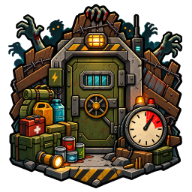
Survival Log Crafting Guide: Master the Workbench and Outlast the Apocalypse
Learn essential Survival Log crafting tips, from tools to furniture. Master the workbench and build a fortress to survive the zombie apocalypse.
Why Crafting is the Heart of Survival Log
The apocalypse is coming, and you have just ten hours to prepare. In the new zombie survival sim Survival Log, your ability to hoard supplies is only half the battle. The other half hinges on your mastery of the game's deep crafting system. Whether you are fortifying your home or cooking a proper meal, Survival Log crafting is the central mechanic that bridges your pre-apocalypse prep with your post-outbreak survival. Every nail you hammer and every meal you cook determines if you thrive or become zombie food.
Developed by Midnight Workshop and published by Lilith Games, Survival Log crafting isn't just about clicking a button. It requires planning, resource management, and a deep understanding of your character's unique background. The game cleverly fuses a pre-disaster hoarding phase with a post-outbreak base management sim. As a player, you'll need to transform a simple home into an apocalypse-proof fortress, which means getting intimately familiar with the workbench, tools, and furniture crafting. This guide will walk you through the essential crafting knowledge you need to survive, based on official game information and early player experiences from the Steam community.
Understanding the Two Phases of Crafting
Before you start hammering nails, you must understand that Survival Log crafting operates in two distinct phases: the "Prepared" phase and the "Stronghold" phase. This dual structure is what sets the game apart from other survival titles.
The Pre-Apocalypse Prep Phase
The clock is ticking before the dead rise. During this first phase, your crafting focuses on immediate needs. You are scavenging supermarkets, hardware stores, and farmers' markets. Your goal is to gather materials that you will later convert into essential items. According to the official Steam page, this is where you make critical decisions about time and money. Do you buy food and water, or do you secure fuel and construction materials?
This phase is all about the "Loot Spotter," a live inventory system that helps you identify critical gaps in your supplies. Crafting here is less about building and more about preparation. You might craft a Crowbar to access locked areas or a shopping bag to increase your carrying capacity. The key is to prioritize materials that will be essential for the second phase.
The Post-Outbreak Stronghold Phase
Once the apocalypse hits, the game shifts entirely. Your crafting now revolves around the Workbench and other stations. This is where the "hoarding survival sim" transforms into a "base-building" game. You will use your gathered resources to fortify your home, set traps, and create self-sustaining systems. The official description highlights that "every resource you invest before the apocalypse becomes the lifeline that keeps you alive after." This makes pre-planning vital for successful Survival Log crafting in the late game.
Essential Crafting Stations and Their Uses
To become a master crafter, you need to know your stations. Each one serves a unique purpose in your survival strategy. Here is a breakdown of the key crafting areas you will interact with, based on the game's official feature list and recent patch notes.
| Crafting Station | Primary Function | Key Items Crafted | Notes from Updates |
|---|---|---|---|
| Workbench | General item crafting and repairs | Tools, Furniture, Weapon parts | The 8/14 update added the Tool Cabinet, which can be opened directly from the Workbench for easy material access. |
| Cooking Station | Food preparation and meal crafting | Cooked meals, recipes | Proficiency rewards are now tiered based on cooking duration. Complex dishes yield greater rewards. |
| Fermentation Barrel | Drink and condiment crafting | Cooking wine, other consumables | The 8/14 update fixed an issue where cooking wine was incorrectly burned as fuel. |
| Generator | Power management and fuel consumption | Fuel refinement, power distribution | Fuel removed from the slot maintains its original form, preventing inventory loss. |
| Mouse Cage | Small game trapping | Food resources (with Satiety value) | Tooltips now clarify that it only accepts food with Satiety value. |
The Power of the Workbench
The Workbench is your primary hub for Survival Log crafting. It's where you'll create the furniture and tools needed to upgrade your stronghold. The game's recent 8/14 update introduced a new "Tool Cabinet," a storage furniture item with 80 slots. This addition was a direct response to player feedback about inventory management. This cabinet can be purchased or crafted and is specifically designed to be accessed directly from the Workbench, streamlining the crafting process.
Key Crafting Recipes and Strategies
While the game doesn't hand you a complete recipe list at the start, the community and official updates have highlighted several crucial items for your survival. Here are some of the most important crafting paths you should prioritize.
The Tool Progression: The Crowbar
One of the first critical crafted items is the Crowbar. According to the 8/14 update notes, the warehouse manager's rescue storyline now provides narrative missions that guide players from crafting a Crowbar to retrieving special items from a truck. This tool is essential for breaking into locked areas and accessing rare loot. It's a prime example of how Survival Log crafting is tied directly to progression and story.
Furniture and Base Building
Fortifying your home is a major pillar of the game. The official Steam page emphasizes that you can "scavenge or purchase furniture, appliances, and construction materials." This allows you to design your safe house layout from scratch.
| Furniture Type | Purpose | Crafting/Obtainment | Strategic Value |
|---|---|---|---|
| Storage (e.g., Tool Cabinet) | Increase inventory capacity | Crafted or purchased from store | Essential for hoarding supplies. The Tool Cabinet's 80-slot capacity is game-changing. |
| Living Quarters | Housing for survivors and player | Crafted or purchased | Required to expand your stronghold and support more survivors. |
| Power Generation (e.g., Super Large Fuel Generator) | Provides electricity to the base | Crafted or purchased | Critical for powering appliances and defenses. The 8/14 update fixed flickering issues with this item. |
| Farming Areas | Growing crops for food sustainability | Built after unlocking | Allows for self-sufficiency, reducing reliance on scavenging. |
| Traps (e.g., Chainsaw Traps) | Base defense against zombie hordes | Crafted | High energy cost. Player experience suggests they might need to be toggled or deconstructed to save power. |
Cooking and Self-Sufficiency
Surviving isn't just about staying alive; it's about staying sane. The game encourages you to "grow your own crops and cook proper meals." The Cooking Station is where you turn raw ingredients into delicious, morale-boosting meals.
- First-Time Crafting Bonus: The 8/14 update notes that cooking proficiency rewards are now tiered based on the complexity of the dish. This encourages players to experiment with new, more intricate recipes.
- Refrigerator Access: Reaching Cooking Lv2 unlocks direct Refrigerator access, a significant quality-of-life upgrade that allows for better food storage and management.
- Resource Management: A recent patch fixed an issue where cooking wine was being burned as fuel. Now, it's correctly used for cooking, making it a valuable crafting ingredient for specific recipes.
Optimizing Your Crafting Efficiency
To truly master Survival Log crafting, you need to be efficient. The game's time management mechanics mean that every second spent crafting is a second not spent scavenging or fortifying. Here are some tips gleaned from official updates and community reports to help you optimize your runs.
Embrace the "Roguelite" Progression
The game is a roguelite, meaning death isn't the end. As the official description states, "Every failure becomes experience. Reborn with your memories, uncover the disaster's truth." This has a massive impact on crafting:
- Knowledge Persists: When you die, you'll respawn with notes that restore most of your crafting proficiency. This means you won't have to re-learn recipes from scratch.
- Planning Cards: The 8/14 update introduced new "Planning Cards" that modify your run. For example, the "Deep Cultivation" card extends growing time for higher yields, while the "Scavenging" card increases daily scavenging dispatch attempts. These cards can significantly alter your crafting priorities.
Master the Inventory System
Inventory management is a core part of the game, and the developers have made significant quality-of-life improvements based on player feedback.
- Right-Click Quick Transfer: The 8/13 update added a new right-click quick transfer feature. In interfaces like the Workbench or Cooking Station, you can now right-click items to instantly move them, saving precious time. This is a game-changer for Survival Log crafting.
- Car Trunk Access: After buying a car, you can access its trunk directly from your backpack tab without walking to the vehicle. This streamlines the process of transporting large quantities of materials to and from your base.
- Large Ingredient Optimization: A recent update made it so large ingredients can be completely cut with a single click, preventing accidental drops and saving time during food preparation.
Plan Your Base Layout
Where you place your crafting stations matters. The game allows you to design your safe house layout from scratch. Consider creating a dedicated crafting room with your Workbench, Cooking Station, and Fermentation Barrel in close proximity. This reduces travel time and makes it easier to manage multiple crafting tasks. The 8/12 update even fixed an issue where building furniture near beds could block character pathing, so careful planning is crucial.
Community Tips and Player Experience
The game is still new, but the community is already sharing valuable insights. Here are some "player experience" tips from the Steam Community forums that can help you refine your crafting strategy.
Energy Management for Traps
A player on the Steam forums asked about chainsaw traps: "Is there a way to turn them off or do I have to keep them on at all times wasting energy or should I deconstruct and remake them every hoard?" This highlights a common dilemma. While the official answer isn't clear, the player experience suggests that energy management is a significant concern. It might be more efficient to deconstruct and rebuild traps only when a horde is imminent, rather than leaving them on and draining your power reserves.
Dealing with Spoiled Goods
Another common question on the forums is about moldy food. One player asked, "How do I get rid of the moldy food? I've kept it in a box all on its own but can't figure out how to get rid of it properly." This is a classic survival game problem. While the game doesn't explicitly state the solution, it's likely that a crafting station or a specific disposal method will be added in a future update. For now, players are experimenting with different methods.
The Value of Neighbor Gifts
The 8/13 update significantly enhanced neighbor gifts. The quantity and variety have been increased, and categories like Books, Sundries, and Tools can now appear in gift returns. This makes building relationships with your neighbors a key part of your resource acquisition strategy. These gifts can provide rare crafting materials that are difficult to find in the city ruins.
FAQ: Your Crafting Questions Answered
What is the most important thing to craft first in Survival Log?
Based on the game's progression, the Crowbar is a critical early craft. It's directly tied to the warehouse manager's rescue storyline and is essential for accessing locked areas and rare loot. After that, focus on expanding your storage capacity with furniture like the Tool Cabinet.
How does the roguelite death system affect my crafting progress?
When you die, you are reborn with your memories. You'll bring back notes that restore most of your crafting proficiency, meaning you won't have to re-learn recipes. This encourages experimentation without the fear of permanent loss.
Are there any quality-of-life features for crafting in the latest updates?
Yes, the developers have been very active. The most notable addition is the right-click quick transfer feature, which allows you to instantly move items in crafting interfaces. Also, the new Tool Cabinet can be opened directly from the Workbench, making material management much easier.
Is crafting essential for beating the game's endless mode?
Absolutely. In endless mode, you'll need to become fully self-sufficient. This means mastering the full crafting loop: growing crops, cooking meals, generating power, and crafting defenses. As one player noted, their defenses were "impeccable," but they still needed a lot of energy, highlighting the need for efficient crafting of power generation and storage solutions.
Conclusion: Your Crafting Journey Awaits
Mastering Survival Log crafting is the key to transforming from a simple hoarder into a post-apocalyptic warlord. The game's unique two-phase structure forces you to think strategically about every resource you gather and every item you craft. By understanding your crafting stations, prioritizing key recipes, and optimizing your workflow, you can build a fortress that will withstand the endless hordes.
The game is actively being updated, with the developers at Midnight Workshop responding quickly to community feedback. This means the crafting system will only become deeper and more refined over time. So, stock up on supplies, fire up your Workbench, and get ready to survive. Your log awaits, and every craft brings you one step closer to rewriting the ending of the apocalypse. For more information and to join the community, be sure to check out the official Survival Log Steam page.
Related Guides
Survival Log Cooking Guide: Master Meals to Boost Stamina and Morale
Learn the best Survival Log cooking strategies, meal timing, and kitchen setups to keep your group fed and morale high.
Survival Log Planting Guide: How to Grow Food & Survive the Apocalypse
Master Survival Log planting with our beginner's guide. Learn seed selection, crop rotation, fertilizer use, and safehouse farming tips.