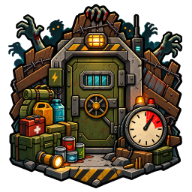
Survival Log First Look: A Time-Loop Hoarding Survival Sim Worth Stocking Up On
Our Survival Log first look covers the demo's time-loop premise, pre-apocalypse prep, base building, and resource management.
A Death Sentence Turns Into a Second Chance
Dying of a fever, starving, and being overrun by zombies is a rough way to start a game. But in Survival Log, that brutal opening is just the catalyst for a much more interesting premise. This Survival Log first look reveals a game that flips the typical zombie survival script: instead of just reacting to the apocalypse, you get a chance to prepare for it. The core hook is a time loop—you live through your death, wake up hours before the outbreak, and use that foreknowledge to hoard supplies and fortify your home. It’s a fresh take on the genre that combines the anxiety of a countdown timer with the deep satisfaction of a well-organized stockpile.
Developed by Midnight Workshop and published by Lilith Games, Survival Log launched on Steam on August 12, 2026. This first look is based on hands-on time with the demo and a review of the official Steam page, offering a clear picture of what players can expect from this unique blend of resource management, base building, and survival strategy.
The Core Loop: Die, Learn, and Prep
The game’s narrative is its strongest opening hook. You begin as an ordinary person, barricaded in a bedroom, sick and starving 13 days after a disaster. The streets are filled with the undead, and your supplies are gone. You have no medicine, no food, and no hope. It’s a grim, desperate sequence that effectively establishes the stakes. When you finally succumb and step outside, you’re immediately overwhelmed, but instead of a game over screen, you wake up in your bed. The date is the same day the apocalypse began. You remember everything.
This isn't just a dream; it's a memory from the future. The game then shifts from a survival horror opening to a strategic planning phase. You have roughly 10 hours of in-game time before chaos erupts. This countdown is the driving force of the pre-apocalypse segment. Every trip to a store, every purchase, and every return home consumes precious time, forcing you to prioritize what's essential. The game’s "Loot Spotter" inventory system helps you track what you have and, more importantly, identify critical gaps in your preparations.
Your Pre-Apocalypse To-Do List
Your primary goal in the opening hours is to prepare. The game breaks this down into seven major categories visible in your Survival Log, which acts as your main hub for tracking progress. These categories include food, water, security, power, crafting, and more. The log gives you a clear overview of what’s sufficient and what needs immediate attention.
You start with a limited amount of cash—around $70—which means every purchase matters. The game encourages you to visit a variety of locations, each offering different goods:
- Discount Mart: Your go-to for bulk food and long-shelf-life items.
- Hardware Store: Essential for buying tools, materials for barricades, and generators.
- Farmer's Market: The place to find seeds and potting soil for long-term food sustainability.
- Renovation Company: Where you can order furniture, reinforced windows, and security doors.
- Convenience Store: A smaller shop with daily rotating deals that can be surprisingly valuable.
The Prep Phase: A Test of Resource Management
The core of the pre-apocalypse phase is a constant trade-off between time, money, and weight. You have a limited carrying capacity, so you'll find yourself making multiple trips. This is where the strategic depth shines. Do you buy the cheap, filling compressed cookies, or do you invest in more expensive, longer-lasting canned goods? Do you spend your remaining cash on a generator, or is a reinforced door more critical? These are the decisions that define your run.
During the demo, the player experience highlighted the tension of these choices. For instance, the game suggests a route: first to the renovation company to order facilities, then to stock up on food. However, the sheer number of options can be overwhelming. The player in the demo spent a significant amount of time debating whether to buy a $200 cookbook, which is a considerable investment early on. This shows that Survival Log isn't a game where you can buy everything; it’s about making calculated sacrifices.
Key Prepping Priorities
Based on the demo and official game descriptions, here’s a breakdown of what you should focus on before the clock hits zero:
| Priority | Category | Why It Matters | Example Items |
|---|---|---|---|
| 1 | Food & Water | Your immediate survival depends on not starving or dehydrating. Focus on non-perishable items with long shelf lives. | Canned meat, seafood noodles, rice, bottled water. |
| 2 | Security | Your home is your castle. You need to barricade doors and windows to keep the undead out. | Door repair kits, reinforced windows, security doors, building materials. |
| 3 | Power | After the apocalypse, the grid will fail. You need a way to generate electricity for cooking, lighting, and heating. | Diesel generator, solar panels, fuel. |
| 4 | Medical | Injuries and infections are a constant threat. Stock up on supplies to treat wounds and illnesses. | Bandages, medicine, disinfectant. |
| 5 | Sustainability | Your initial stockpile will run out. You need a way to produce food long-term. | Seeds (potatoes, tomatoes), potting mix, planters. |
| 6 | Tools & Crafting | You can't build or repair without the right equipment. A cookbook can also unlock new, more efficient recipes. | Crowbar, hammer, saw, cookbook, tool cabinet. |
From Safe House to Fortress: Base Building
Once the disaster hits, the game transforms. The preparation phase ends, and you’re locked inside your home, which is now your stronghold. The game shifts from a top-down shopping sim to a more focused base management experience. The furniture and appliances you bought are now yours to install and use. A generator needs to be placed and fueled. A reinforced window can be installed to replace a fragile one.
The official Steam page describes this as a deep base-building system. You can design your safe house layout from scratch, installing, upgrading, and customizing every detail. As your survival needs grow, you can expand your home floor by floor, adding living quarters, storage rooms, power generation areas, and even farming zones. This suggests a long-term progression loop that extends well beyond the initial 10-hour countdown. The demo gives a taste of this, showing the player installing a reinforced window and setting up a telescope to observe the chaos outside.
Managing Your Stronghold
After the outbreak, the game evolves into a management sim where you must balance several key stats:
| Stat | Impact | How to Manage |
|---|---|---|
| Hunger (Satiety) | If it hits zero, you'll starve. | Cook meals, eat canned food, grow crops. |
| Stamina | Needed to perform actions like crafting and building. | Sleep in your bed to restore it. |
| Morale | Low morale can lead to negative effects. | Read books, eat good food, talk to neighbors. |
| Health | Your overall physical condition. | Treat wounds, avoid zombie attacks, manage infections. |
The game’s roguelite elements become clear here. If you die, you wake up again in a new loop, retaining some knowledge or notes from your previous run. This "every failure becomes experience" loop is a core part of the design. The Steam page mentions planning cards that can be unlocked to provide permanent upgrades, such as "Deep Cultivation" for farming or "Scavenging" to increase drone dispatch attempts. This adds a layer of meta-progression that encourages multiple playthroughs.
Post-Apocalyptic Survival and Exploration
The game doesn't end when the apocalypse begins; it just changes. While your home is your sanctuary, you will eventually need to venture out. The official description mentions exploring abandoned supermarkets, schools, and city ruins to scavenge for rare resources. This introduces a risk-reward element, as you'll be exposed to zombies and other threats. The demo ends right at this transition point, with the player safe at home and observing the initial chaos, leaving the actual exploration for a future session.
Player reviews on the Steam Community page have drawn favorable comparisons to titles like Project Zomboid and This War of Mine. One player noted it's "A little bit Project Zomboid, a little bit This War of Mine," which is a great summary of its core appeal. The focus on deep inventory management, base building, and the psychological toll of survival is reminiscent of those genre classics. The game is currently in a "Mostly Positive" state on Steam, with 71% of 433 reviews being positive, which is a solid start for a new indie title.
Community Feedback and Post-Launch Support
Since its release on August 12, 2026, the developers have been actively patching the game. The Steam Community page shows a series of updates addressing player feedback. The 8/14 update, for example, added new rescue guidance for the warehouse manager's storyline, introduced a new 80-slot Tool Cabinet for storage, and optimized character unlock progression. This demonstrates a commitment to improving the player experience based on community reports.
These updates also highlight the game's complexity. One player asked about turning off chainsaw traps to save energy, while another inquired about getting rid of moldy food. These are the kinds of questions that come up in deep simulation games, and the developers seem responsive in addressing bugs and adding quality-of-life improvements. For a $10.99 game (currently $9.34 with a 15% launch discount), the level of post-launch support is encouraging.
Our Verdict: A Promising Start
This Survival Log first look reveals a game with a fantastic core concept and a surprisingly deep loop. The pre-apocalypse preparation phase is a unique and tense experience that sets it apart from other survival games. The transition to base management and exploration after the outbreak suggests a solid long-term game. While the demo showed some moments of confusion regarding what to prioritize, this is part of the learning process that the game's roguelite structure encourages.
The game is not without its rough edges, as some community reviews have noted minor bugs and a bit of a repetitive early game. However, the developers are actively working on fixes and improvements. If you're a fan of resource management, base building, or zombie survival games, Survival Log is absolutely worth a look. It offers a clever twist on a well-worn genre and provides a satisfying challenge in optimizing your pre-apocalypse shopping list.
Frequently Asked Questions
What type of game is Survival Log? Survival Log is a single-player, zombie-apocalypse survival simulation game that blends resource management, base building, and roguelite elements. You prepare for a disaster you know is coming, then manage your stronghold to survive the aftermath.
When was Survival Log released? The game was officially released on Steam on August 12, 2026, by developer Midnight Workshop and publisher Lilith Games.
What is the main gameplay loop in this Survival Log first look? The core loop is to die, wake up with your memories intact, and use the time before the apocalypse to hoard supplies and fortify your home. After the disaster hits, you must manage your base, scavenge for resources, and survive as long as possible.
Is Survival Log similar to Project Zomboid? Many players have drawn comparisons to Project Zomboid and This War of Mine. It shares a similar focus on deep inventory management, base building, and the harsh realities of survival, but its unique time-loop and pre-apocalypse preparation phase set it apart.
Related Guides
How to Earn Survival Log Survival Points Fast: Complete Guide
Learn how to earn Survival Log survival points quickly with this guide covering wishes, morale, events, and progression strategies.
Survival Log 20 Day Achievement: How to Survive the Full Demo Run
Learn how to unlock the Survival Log 20 day achievement with this complete guide covering prep, resource management, and survival strategies.
Survival Log Apocalypse First Day Guide: 10-Hour Prep Checklist for Success
Master the Survival Log apocalypse first day with our expert prep guide. Learn the best hoarding, fortification, and survival strategies.
Survival Log Disasters Guide: How to Survive Every Catastrophe
Master Survival Log disasters with our expert guide. Learn to prep for zombie hordes, blackouts, and cold waves to keep your base secure.